

Stormwater Management
Emergency Response
When rain falls onto the ground, it can do one of two things: it can soak into the ground and become groundwater or flow on top of the ground and become runoff. When water soaks into the ground the soil acts as a filter catching and holding anything that the water brought with it, therefore trees and other plant life end up capturing the nutrients that came with the stormwater. When the water is not able to enter the ground, but rather falls onto a parking lot, a road or a roof top, it will travel above ground until it hits the nearest river, lake or stream. Unfortunately, stormwater can bring along a number of contaminants that can harm our waterways, such as car oils, fertilizer, and pet waste. The water carries all of these unwanted contaminants into the water system and can have a negative effect on aquatic life, creating a dead zone. A dead zone is an area in which the oxygen is taken out of the water resulting in fish kills along with reefs disappearing. When a dead zone occurs, it can have a disastrous effect on a community’s economy along with a recreational impact. Other negative instances may include erosion and flooding, or in some cases, sending raw sewage into the environment and possibly causing backups in people’s private residences. Sewage backup in homes usually only occurs when communities have a combined sewer system, meaning that stormwater and the sanitary sewer are connected. When this happens and a lot of runoff enters the system it causes a combined sewer overflow (CSO), thus leading to the aforementioned issues.
The best way to mitigate these instances is know what and where your stormwater assets are, know what condition those assets are in, and create a maintenance plan to keep them in good working condition. Your curb inlets and retention ponds need continuous care, they can clog up with trash or leaves after a storm event. The assets that you will find in the field are important to the capture, retention, and conveyance of stormwater runoff. Stormwater assets are everywhere. Some of these assets include retention basins, stormwater swales, catch basins and outfalls:
Retention basins are designed to store runoff for about 72 hours to allow water to seep through the soil into the groundwater aquifer. The grass stabilizes the basin slopes and filters sediment. Retention systems are closed systems meaning the water stays in place.
Dry retention basins, hold a certain amount of water, and through percolation dries over time – usually within 72 hours. This system has an overflow that allows water to be discharged during a storm when the rain event is bigger than the system was designed to handle.
Retention ponds, considered a wet retention basin, are designed to allow material to settle and be absorbed after a rain event. Water is allowed to drain through a pipe in the overflow structure and flows into anther body of water like a river or lake. A part of the retention pond known as the permanent pool is always below the level of the drain structure.
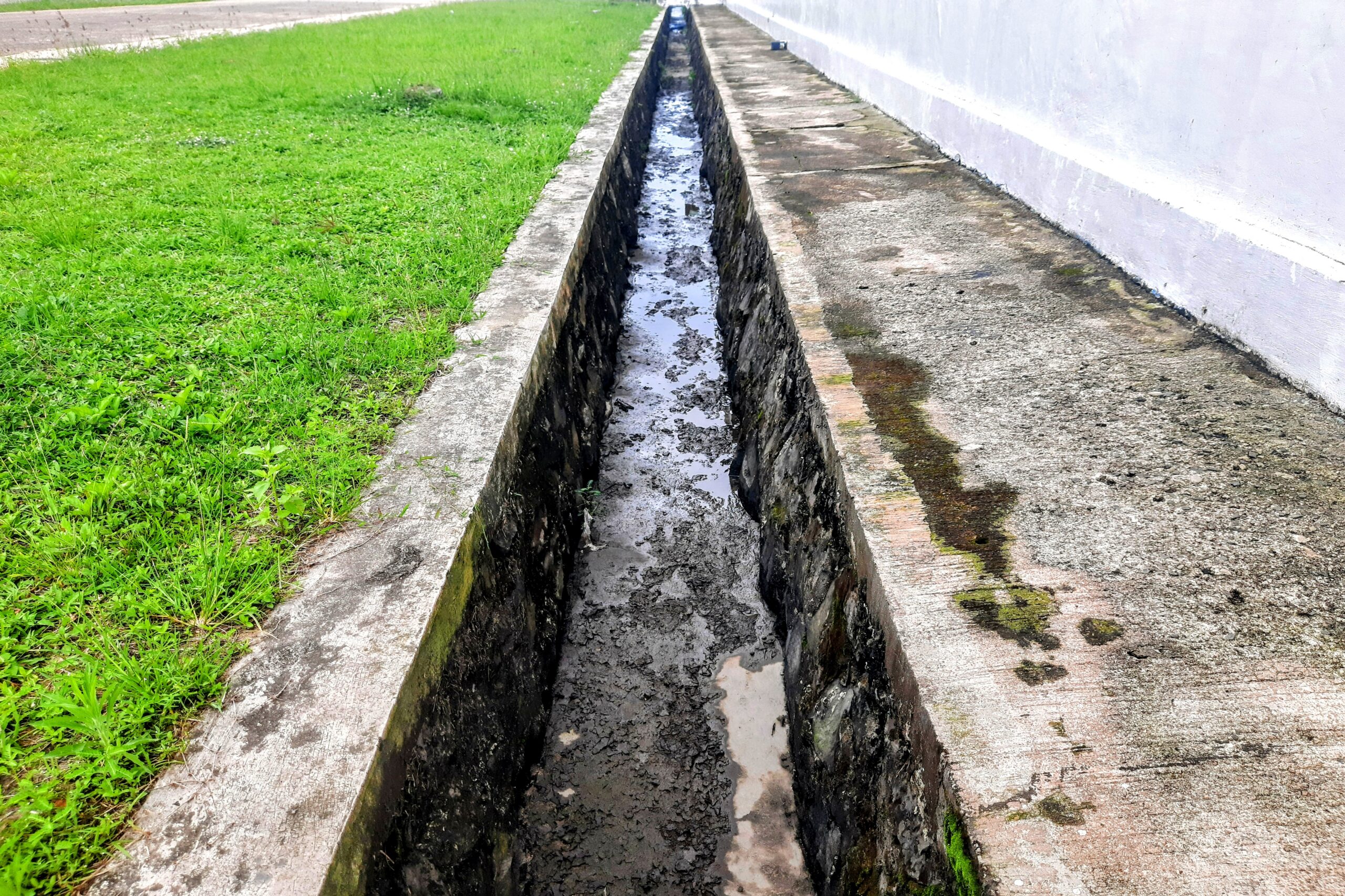
Stormwater swales are shaped to allow water to be quickly absorbed into the ground or to allow the water to flow to other waterways. Swales promote water absorption; they hold water during and right after a storm, and are dry at other times.
One unique outlet control structure is the bubble up catch basin, or bubble up chamber. They are designed to manage discharge from stormwater detention or retention facilities, and are used in areas that have a flat terrain or a high groundwater table. The bubble up structure consists of a vertical riser pipe with a perforated bottom submerged in the stored stormwater. As the water level rises, it bubbles up through the perforations creating a controlled release that prevents sudden, high velocity discharges.
The best way to ensure that your stormwater system is performing properly is to conduct regular maintenance. Debris and sediment removal are required, because cleaning out accumulated debris, trash and sediment from the outlet structures will help to maintain flow capacity and prevent clogging. Vegetation management is another way to ensure proper performance, as the health and proper growth of the vegetation associated with the ensures optimal water quality and flow control. Lastly, performance monitoring is necessary to ensure that discharge rates, water quality, and other performance metrics, are used to verify that the outlet control structure is functioning as designed and meeting regulatory requirements.
The end result of the system are the outfalls; this is where the collected stormwater is discharged from a pipe, channel, or other conveyance system such as a stream, river, lake or the ocean. They must be carefully designed to mitigate the environmental impacts of the discharged water. Components such as headwalls, which are vertical concrete structures that provide a stable, reinforced end to a pipe/channel, and riprap, a layer of large loose stones or rocks used to protect soil from erosion caused by water, is also used to dissipate the discharged waters kinetic energy.
In order to accomplish this design, for example, the Southeast Rural Community Assistance Project (SERCAP) utilizes Geospatial Information Systems (GIS) data. SERCAP, when working with a community’s water and wastewater utility personnel, would first collect all of the as-built maps of the stormwater system. Then, a map would be created in ArcGIS. SERCAP would then coordinate a date and time to conduct an onsite visit with the utility to begin the data collection process. This process involves going out into the community to find and identify the stormwater assets, collect the GIS data points, and enter all the information about the stormwater asset.
The information collected would include:
- where the assets are located;
- what condition they are in; and
- the outcomes if they were to fail to work as intended.
Aside from the GPS points, other important information such as the diameter of pipes, the condition of stormwater manholes, and where the stormwater leaves the system are all vital to have on file. All of this information together is considered a stormwater asset management plan. With a robust plan, any utility can establish a proactive approach to the maintenance and monitoring of the system ensuring that water quality, protecting waterways and prevent flooding in the community.
This article was funded under RCAP’s USDA WEP Disaster 2024 – 2026 grant.