

How Our Wetland Septic System Operates!
Wastewater
In the United States, over 80% of the population are served by community drinking water. However, only 20% have community wastewater systems. The remaining 80% rely on individual septic systems and decentralized neighborhood systems. This means the chances are high that you or someone you know relies on a septic system.
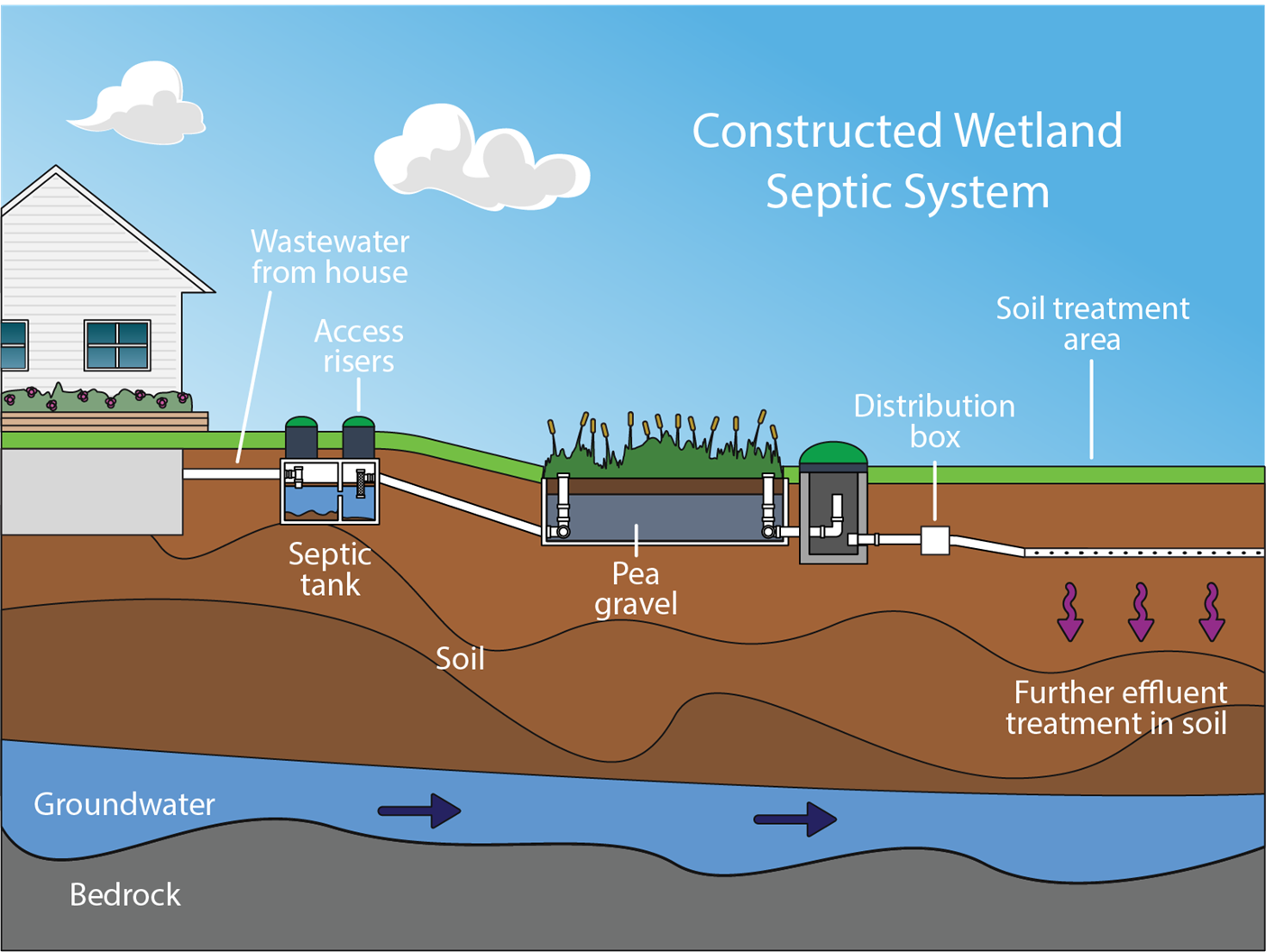
The basic system consists of a septic tank, a distribution box, and a drain field. However, in areas of poor drainage, constructed wetlands are added to the treatment process. These wetlands mimic the natural filtration process by utilizing vegetation, soil, and microorganisms to filter out contaminates.
So how does it all work? The wastewater travels from the home into the septic tank. These tanks range from 1,000 to 2,000 gallons and are made of concrete, heavy plastic, or metal. Many modern tanks have two chambers to increase their efficiency by creating retention time for the waste to settle in the tank. Oil and grease float to the top of the tank (called scum) and solid waste sinks to the bottom (known as sludge). The sludge contains bacteria and other anaerobic (without oxygen) microorganisms that work to break down the waste. The partially treated wastewater, or effluent, discharged from the tank is mostly clear water.
The effluent then travels to the wetland — a shallow basin filled with layers of gravel and pebbles as well as aquatic plants such as cattails, bulrushes, and various grasses. These plants help remove pollutants such as nitrogen, phosphorus, and various pathogens through physical, chemical, and biological processes.
The effluent then moves from the wetland to the leach/drain field. This consists of rows of perforated pipes buried in gravel trenches. These trenches must be below the freeze line, typically 18 to 36 inches deep. The effluent then passes through the pipe into the surrounding gravel and into the soil. A bacteria-rich slime layer, or biomat, develops where the gravel meets the soil and where the remaining water purification occurs.
A septic system will operate for many years with routine maintenance, which must include regularly pumping out the septic tank. If either the sludge or the scum layer gets too deep, it will overflow into the discharge, which can cause damage to the wetland and the drain field. Additionally, care must be taken to limit the amount of cooking fats and greases that enter the system. Furthermore, there is no such thing as a “flushable wipe.” The septic system will not function correctly with the addition of these products.
Ultimately, avoid overloading the system. Excessive water from heavy household use and drainage can overload the system and result in waste bypassing the initial stages of treatment and settling. Studies show that only about 10% of systems fail due to lack of maintenance. Most fail from overloading. 97% of systems fail due to a flooded drain field. As a result, it kills off the aerobic bacteria in the slime layer from lack of oxygen, creating a system failure.
Constructed wetlands function much like the kidneys in the human body. They help to separate and remove waste from the system. However, these wetlands do have challenges, especially in cold temperatures. This leads to less-than-optimal operating conditions in winter months. The plants are also vulnerable. Many find it hard to develop and maintain a dependable vegetative cover over the wetland. Additionally, clogging is also an issue. Failures in the wetland create poor water quality and, in turn, overload the drain field.
Currently, we remain dependent on our septic systems to properly treat and remove waste from our homes. With good design, professional installation, and thoughtful maintenance, these systems can safely serve for years. For more information concerning septic systems as well as care and maintenance, go to https://www.epa.gov/septic.
This article was funded under RCAP’s EPA TW 4 2023 – 2026 grant.